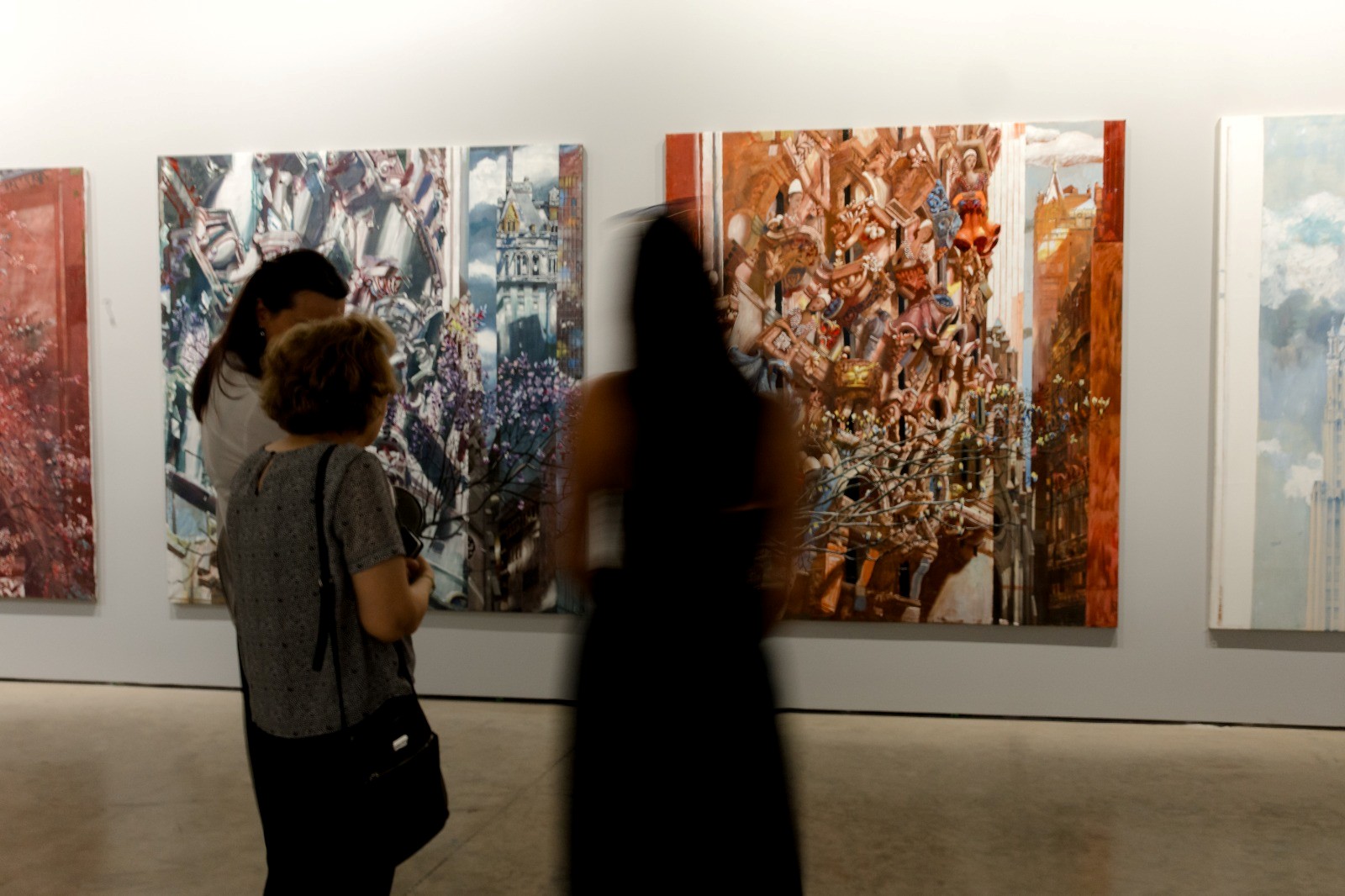
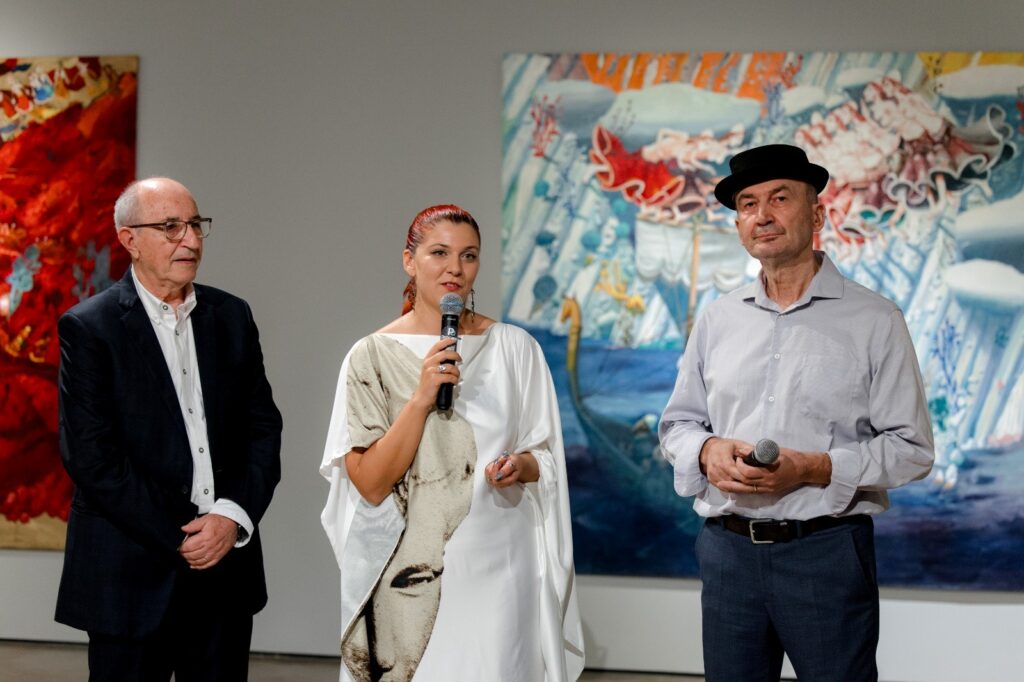
“Wanderlust” is the latest exhibition by artist Bashkim Ahmeti Izano, now on view at Gallery of Contemporary Art Tirana (GOCAT), at the Pyramid. Curated by Alkan Nallbani, the exhibition brings together a body of work where history, myth, memory and imagination meet and are transformed through Izano’s distinctive visual language.
For years, Bashkim Ahmeti Izano has divided his artistic life and practice between the United States and Albania. Yet it has been some time since his work was last presented directly to the Albanian public, making “Wanderlust” a meaningful return to Tirana’s contemporary art scene. Across the exhibition, Izano revisits figures, symbols and fragments of collective memory, not to reproduce them as we know them, but to place them within a world of his own, somewhere between the familiar and the imagined, history and dream.
At first glance, the works draw the viewer in through color, figures and detail. But the longer one stays with them, the more layers begin to emerge. Characters and images feel at once familiar and distant, like fragments of a memory that can be personal, historical and universal at the same time.
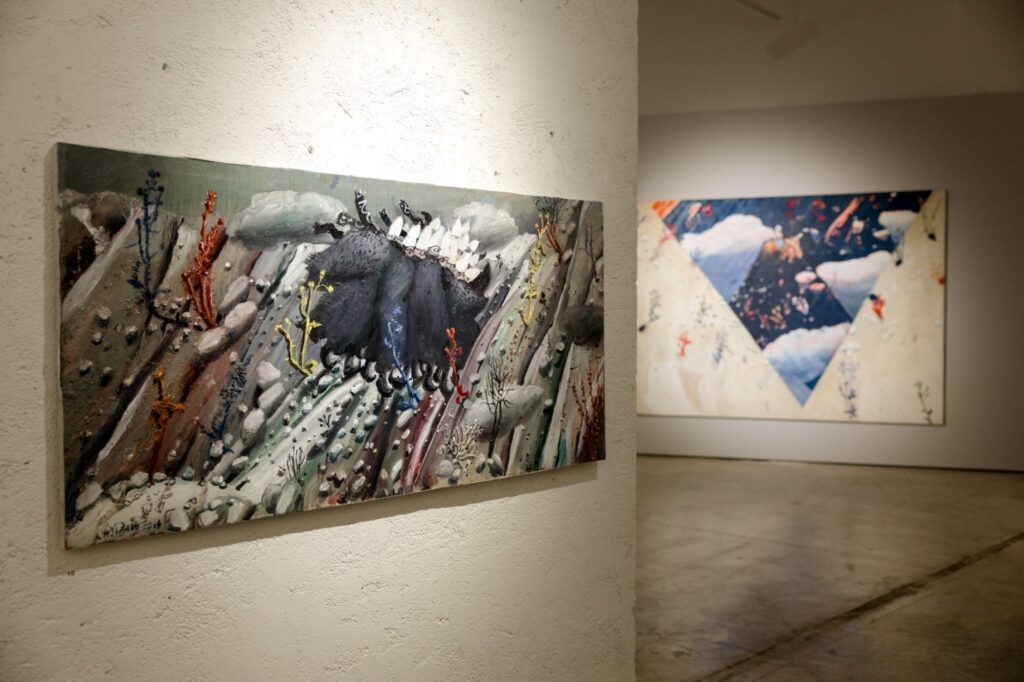
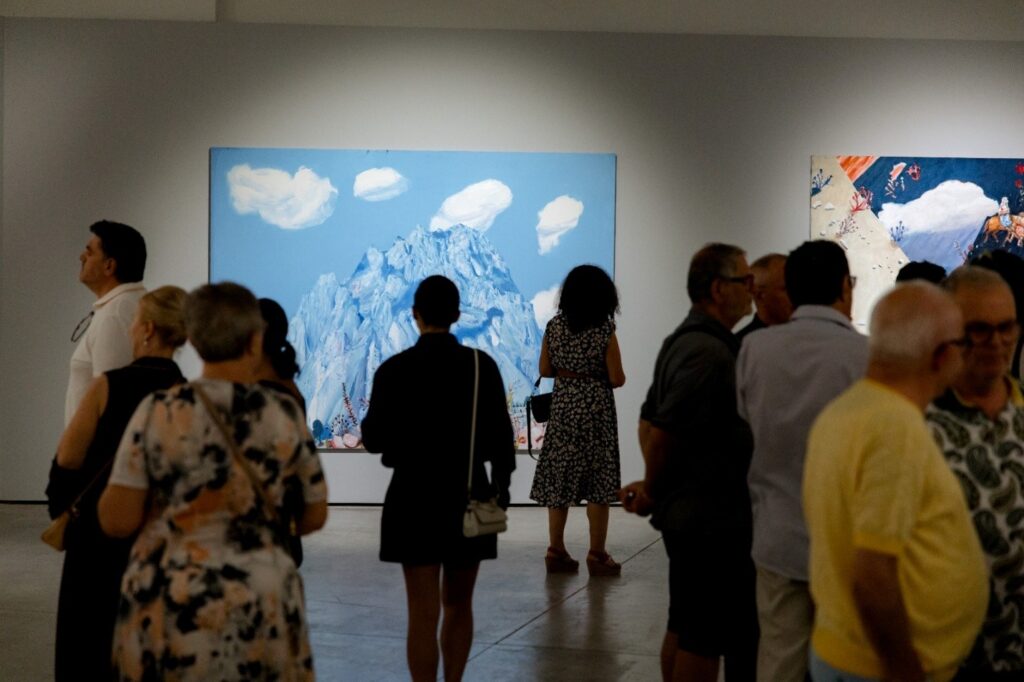
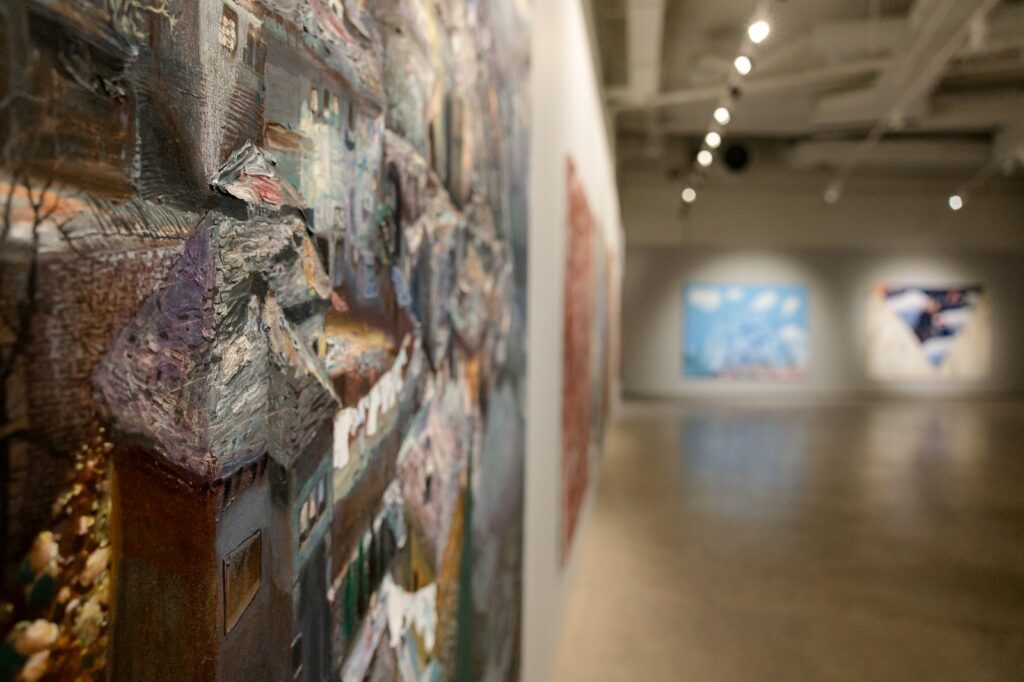
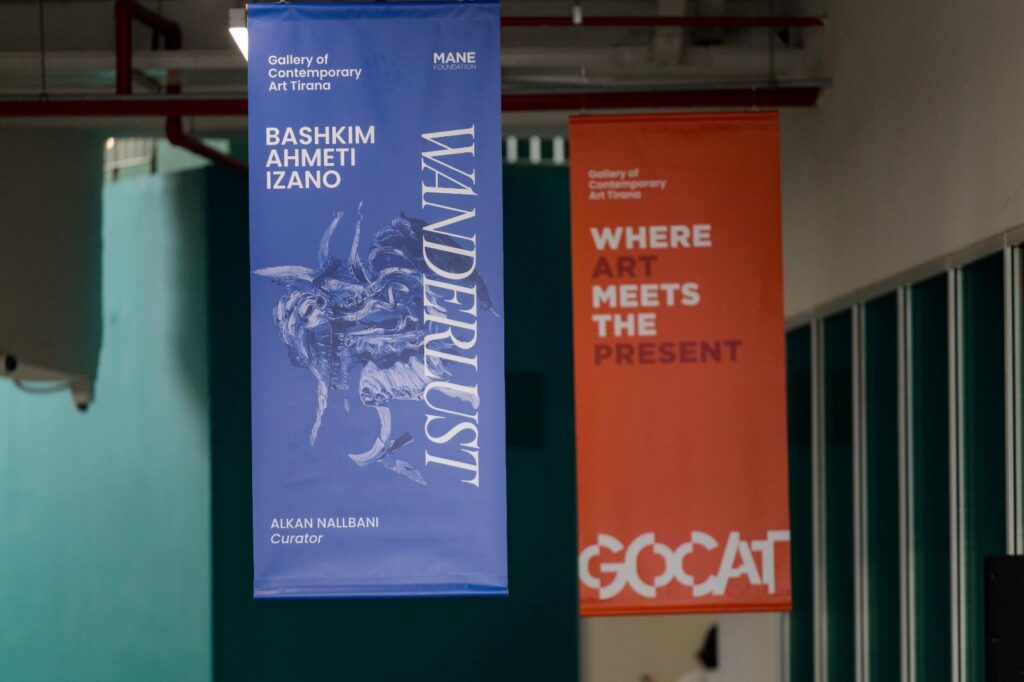
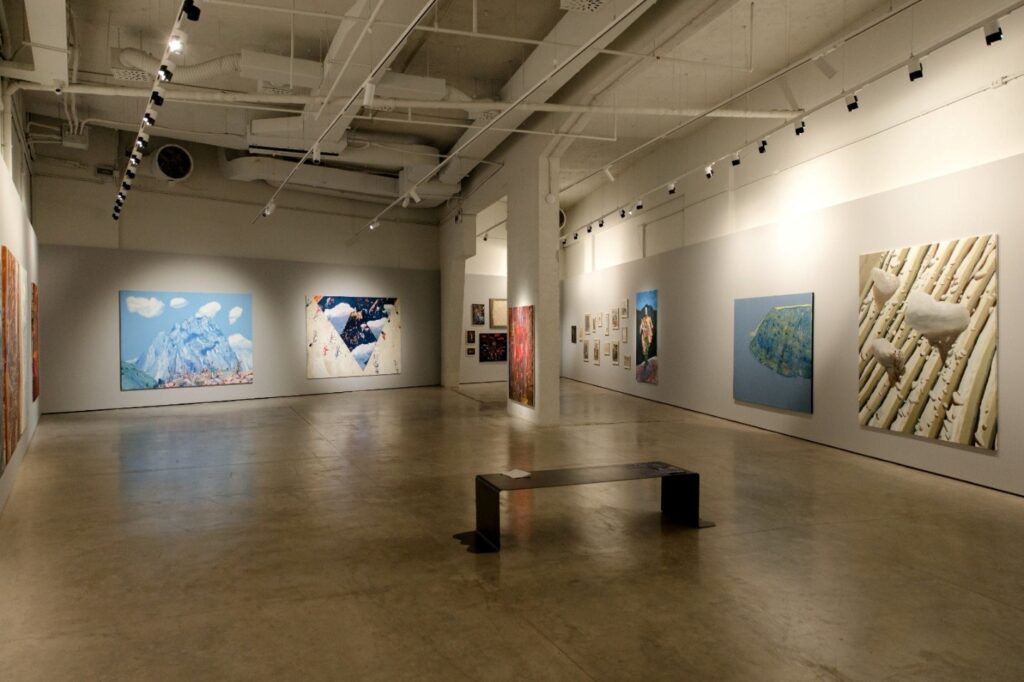
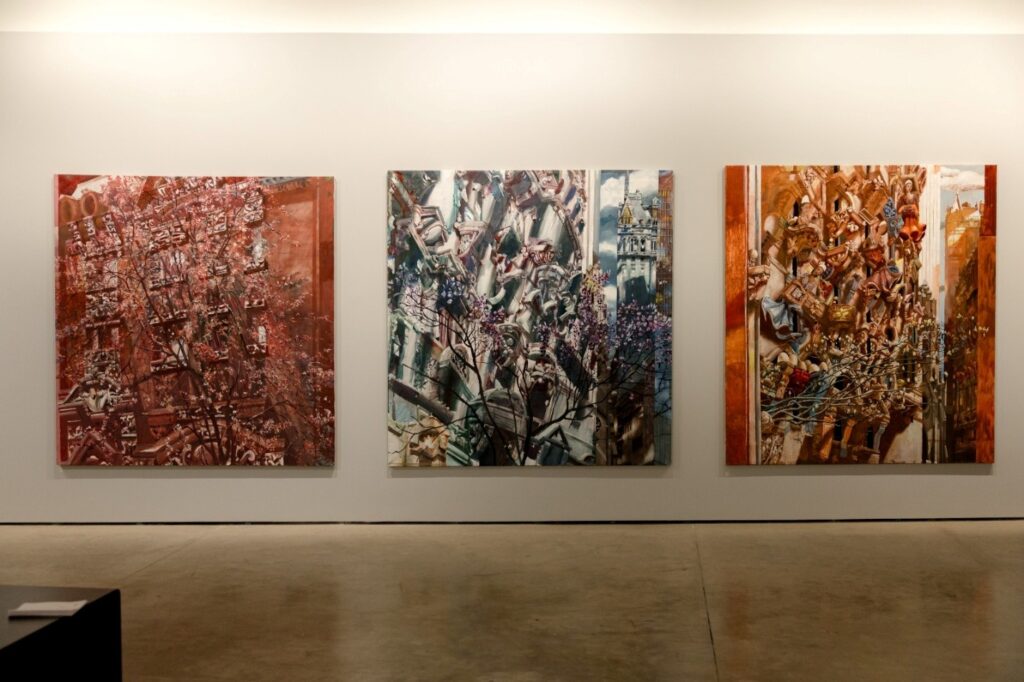
The title itself, “Wanderlust”, evokes the desire to travel. Here, however, the journey does not necessarily require a physical destination. It unfolds through memory, images, myths and stories, all reimagined through the artist’s perspective.
For Bashkim Ahmeti Izano, returning to Tirana with a new exhibition also carries a personal significance.
“Returning to the Albanian public after such a long time is very special to me. ‘Wanderlust’ brings together many of the ideas and experiences that have shaped my artistic journey, while still leaving room for each viewer to create their own interpretation. I am grateful to GOCAT for welcoming this exhibition and to Mane Foundation for the support it gives to art and artists. For an artist, it is important to find a space where the work can breathe and enter into a genuine dialogue with the public,” says Bashkim Ahmeti Izano.
Under the curatorship of Alkan Nallbani, the exhibition builds precisely this relationship between artwork and viewer. Rather than offering fixed answers, “Wanderlust” invites visitors to pause, observe and discover the connections between historical references, symbolic figures and the artist’s inner world.
For Ena Bulku, Director of GOCAT, Izano’s presence in the gallery’s program is also an important moment within the current exhibition season.
“This exhibition is particularly meaningful for us because it brings back to the Albanian public an artist with a long creative journey, whose practice has developed for years between Albania and the United States. ‘Wanderlust’ has a very strong identity and a visual language that immediately draws you in, while also asking you to spend time with the works and discover them gradually. This is exactly the kind of exhibition we want to bring to GOCAT, one that opens conversations, creates curiosity and stays with you even after you leave the gallery,” says Ena Bulku.
She adds that the exhibition also reflects the direction GOCAT continues to build through its artistic program.
“Our season is about bringing together different artists, stories and perspectives, while allowing each exhibition to have its own distinct identity. With ‘Wanderlust’, visitors step into Bashkim Ahmeti Izano’s universe, but they also encounter themes that are familiar to all of us, memory, history, departure, return and the way imagination reshapes them.”
With the continued support of Mane Foundation, GOCAT is strengthening its role as a space for contemporary art in Tirana, bringing different artistic practices closer to the public and creating new opportunities for dialogue between art, the city and its audiences.
In this context, Bashkim Ahmeti Izano’s return carries an added meaning. It is more than the presentation of a new exhibition; it is a renewed encounter between the artist and the Albanian public.
“Wanderlust” is a journey between what we remember and what we imagine, between the places we have been and those art can still take us to. For Bashkim Ahmeti Izano, it is also a return and the beginning of a new conversation with the Albanian public.